TECFINITY
Internal Platform · Live
Venue Pass
A multi-tenant ticketing and access-control platform — online sales, a published partner API, and door validation that cannot let the same ticket through twice.
venuepass.gr · operator and partner access
Client
Mr. Polatidis
Type
Internal Platform
Sector
Event Management
Status
Live
The Brief
One ticket, one entry — and a box office around it.
Combat sports events sell thousands of tickets, and the door is where a ticketing system either works or embarrasses everyone. The original requirement was narrow: no double-scans, no counterfeit entry, live visibility for management. What the platform grew into is broader — selling the ticket as well as checking it, for more than one promoter at a time.
Venue Pass now runs as a hierarchy of tenants: the platform operator, resellers, and the promoters beneath them, each seeing only their own events. It sells tickets online under a merchant-of-record model, issues them in batches, validates them at the door from either a scanner app or a paired phone browser, and publishes a partner API for customers who want to drive it from their own systems.
Screens
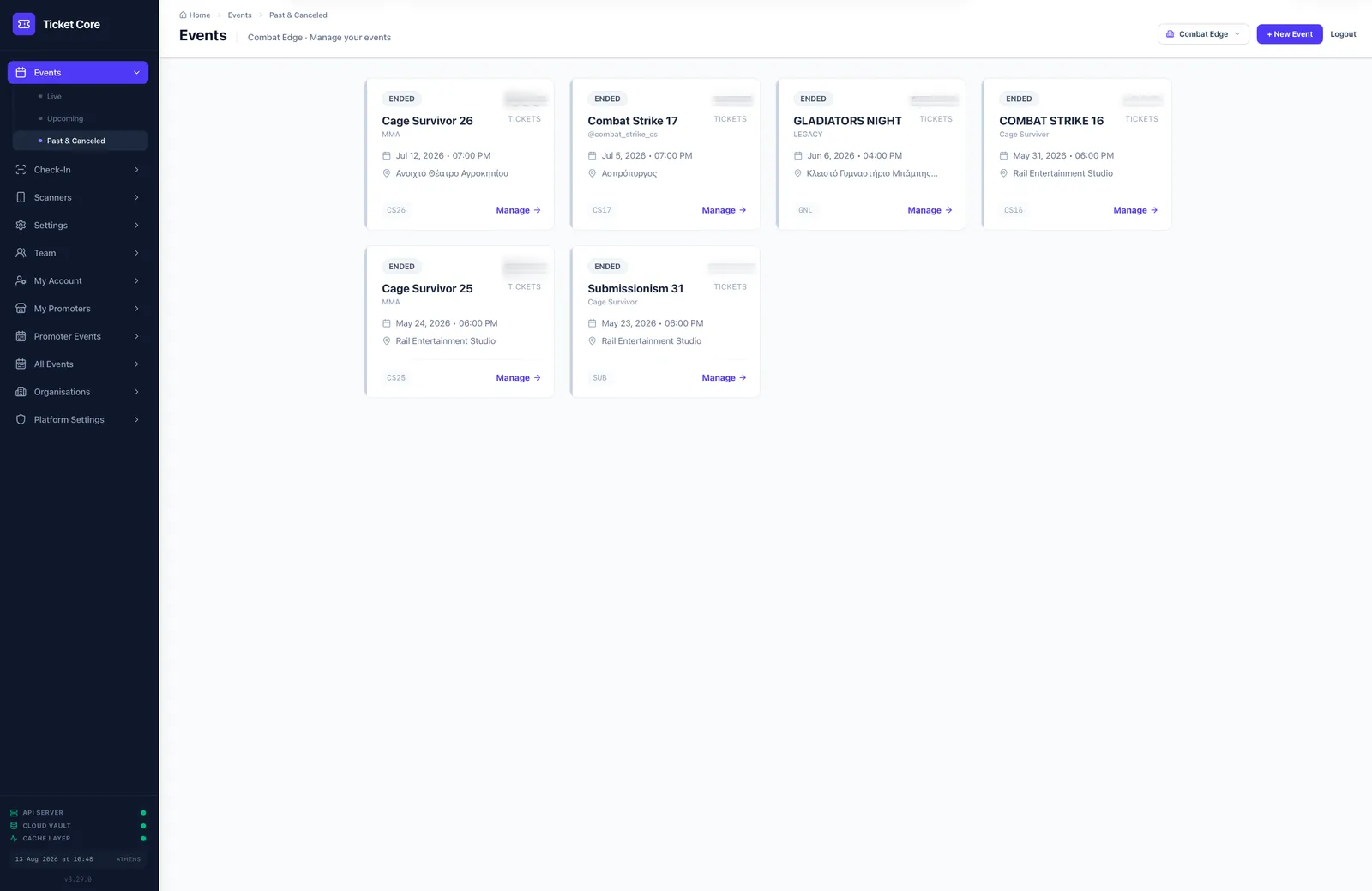
Events overview 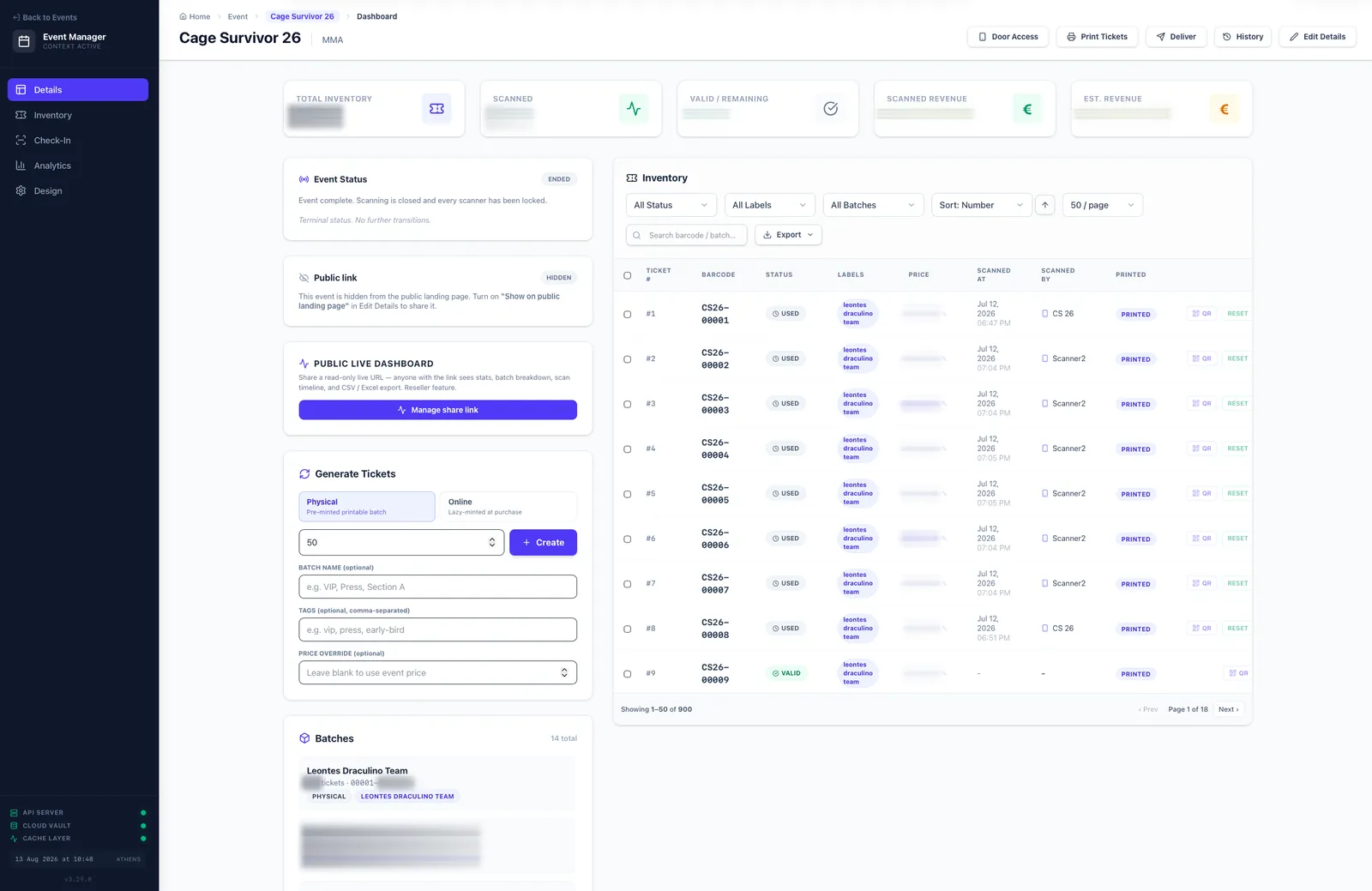
Live inventory and scans 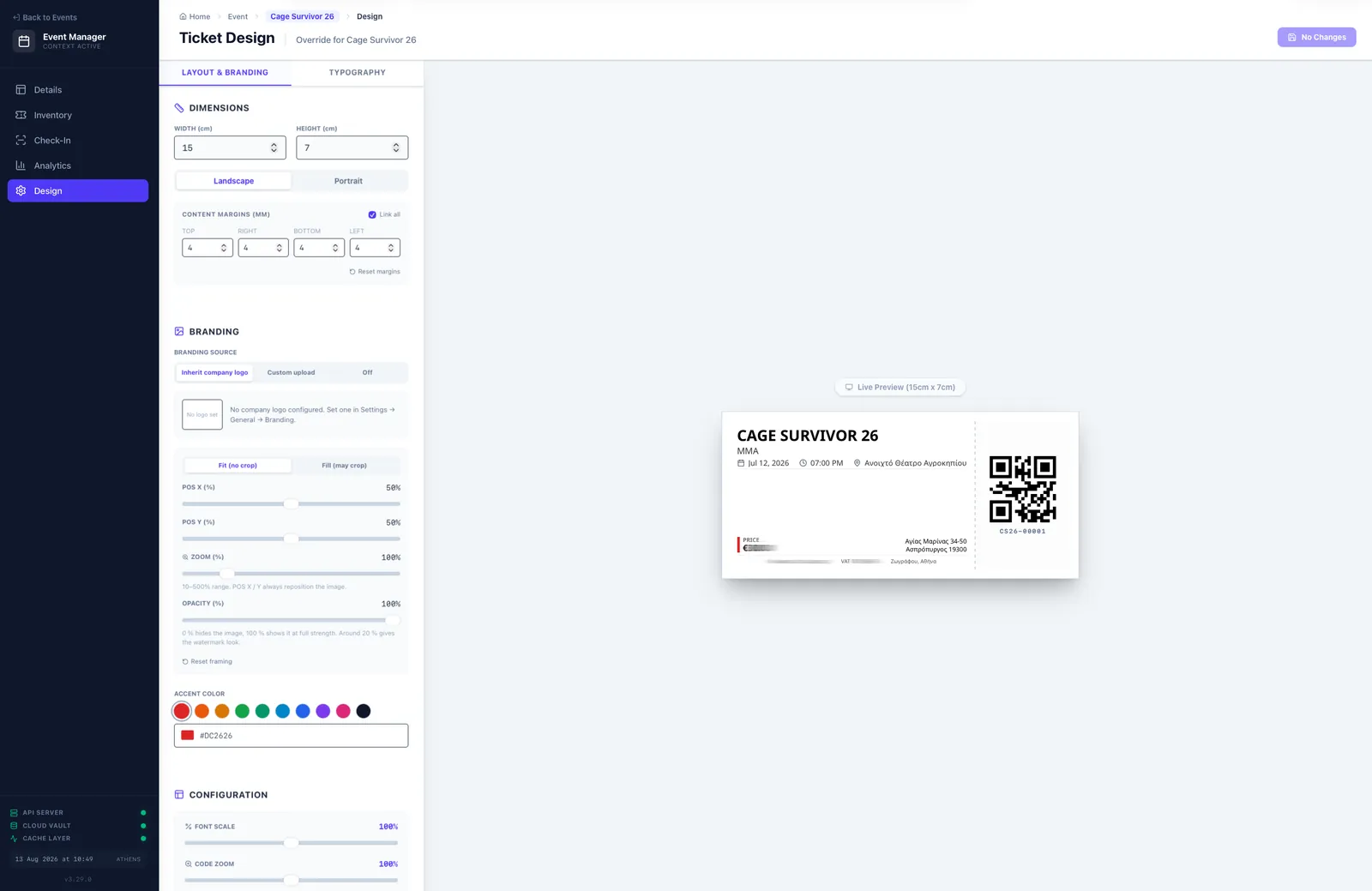
Ticket designer 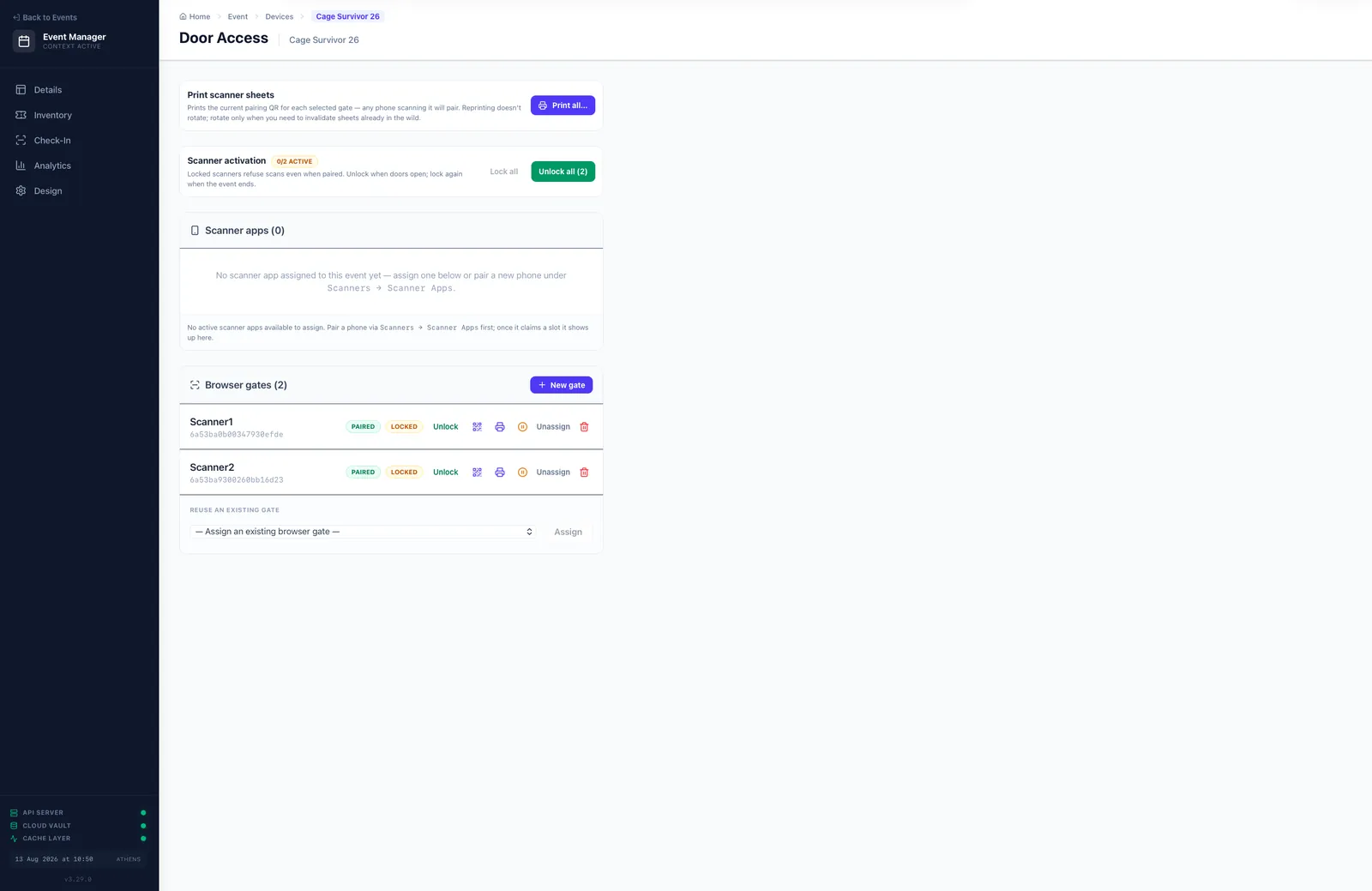
Door access control
Deliverables
What was built.
A ticketing API, the surfaces that sell, the surfaces that scan, and a published contract for everyone else.
01
Core Validation API
One system serving two audiences: the organiser's own dashboard, and a documented service other companies can connect their systems to, with their own keys, their own usage figures and a verified feed of what happened. Every significant decision behind it is written down.
02
Management Dashboard
A dashboard for organisers to create events, issue ticket batches, watch scan activity live over a streaming feed, and revoke a scanner device instantly.
03
Door Scanner & Browser Gate
A React Native scanner app paired to an admin-created device slot by a short-lived QR code — plus a browser gate, so staff on a phone with no app installed can still work the door.
04
Single-Use Enforcement
The moment a ticket is scanned it is held exclusively, so two doors scanning the same code at the same instant cannot both let someone in. Reversing a scan is possible, but only for an administrator, and it is recorded.
05
Online Ticket Sales
A public ticket page and a hosted card payment, with tickets issued only once the payment is confirmed — and checked twice over, so a payment notification that arrives late or twice cannot hand out a second set of tickets.
06
Partner API & Embed
A documented service for partners, with keys that can be scoped and revoked, per-partner usage figures, and a verified notification whenever something changes — plus a small block of code a customer can paste into their own site to list upcoming events.
Platform Design
Correctness by design.
Every component exists to serve one goal: valid tickets in, invalid tickets out, zero exceptions. Ten formal decision records document every significant architectural choice — the system is built to be understood, audited, and extended.
Platform Components
Ticketing CoreIssuance, validation and sales in one API
Event DashboardFull visibility for management teams
Door SurfacesScanner app, or a paired phone browser
Live AnalyticsReal-time gate data and anomaly alerts
Security Principles
One Entry per TicketTwo doors cannot admit the same code
Audited ReversalScanned stays scanned, unless an admin says otherwise
Documented DecisionsTen records of why it works this way
Platform Integrity
Zero tolerance for fraud.
Counts from the platform repository, September 2026. Online sales run through a single payment provider.
0
Possible double-scans — by design
3
Purpose-built applications
10
Formal architecture decisions recorded
Real-time
Live gate analytics and alerts
Need airtight event infrastructure?
We build systems where correctness is non-negotiable. Let's talk about your next event platform.